- A COA is a lab document confirming peptide identity, purity, and composition
- HPLC (High-Performance Liquid Chromatography) shows purity percentage. Look for 95%+ for research-grade peptides
- Mass Spectrometry (MS) confirms the peptide's molecular weight matches expectations
- Third-party testing is essential; vendor-provided labs can be biased
- Red flags: Missing data, outdated tests (>6 months old), generic COAs, no lab name
- Green flags: Recent test date, specific methodology, accredited lab, detailed results
- A legitimate COA should be specific to your batch and easily verifiable with the testing lab
What Is a Certificate of Analysis?
A Certificate of Analysis (COA) is an official laboratory document that certifies the composition, purity, and identity of a chemical compound or peptide. It's essentially a quality assurance document that answers three critical questions:
- Is this what it claims to be? (Identity verification)
- How pure is it? (Purity percentage)
- Are there contaminants or impurities? (Safety/quality assessment)
Why COAs Matter
In the unregulated peptide research space, COAs are your primary defense against:
- Misidentified products: A vendor may label something as Semaglutide when it's actually a different compound
- Underdosed peptides: A vial labeled as 10mg might contain only 5mg of active peptide
- Contaminated products: Bacterial endotoxins, heavy metals, or incorrect amino acid sequences
- Degraded products: Peptides break down over time; a COA confirms current purity
Think of a COA like an ingredient label on pharmaceutical medication—it's your verification that what's in the bottle matches the label and meets quality standards.
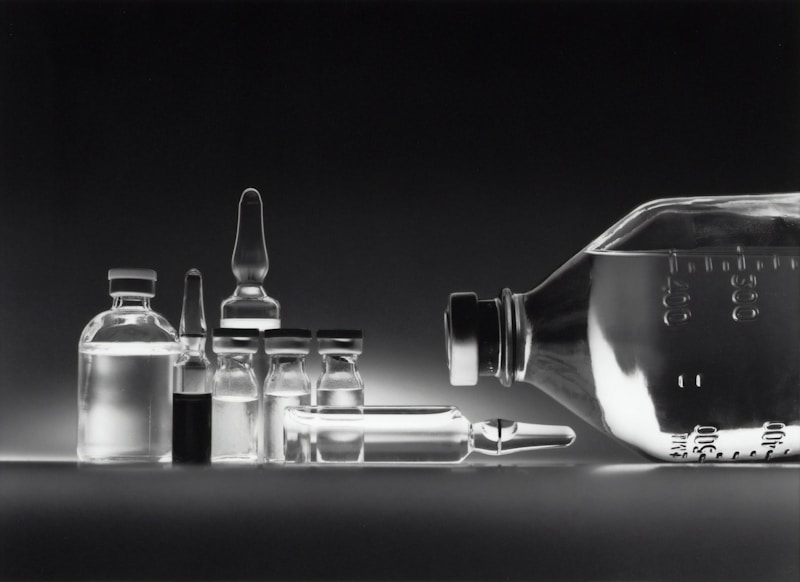
Quality assurance through third-party testing is fundamental to peptide research
Key Components of a COA
A comprehensive COA includes several distinct sections. Here's what you should find:
1. Identifying Information
Every legitimate COA should include:
- Lab name, address, and contact information
- Lab accreditation details (ISO 17025, GLP certification, etc.)
- Test date (should be recent—within 6 months is standard)
- Batch/Lot number (unique identifier for the specific batch tested)
- Product name and purity specification requested
2. HPLC Results (High-Performance Liquid Chromatography)
HPLC is the gold standard for measuring peptide purity. It separates compounds by how they flow through a special column and detects each component.
What to look for:
- Purity percentage (e.g., "98.7% by HPLC")
- A chromatogram (a graph showing peaks—one large peak is your peptide, smaller peaks are impurities)
- The method used (the specific HPLC protocol)
- For research-grade peptides: 95%+ purity is acceptable; 98%+ is excellent
3. Mass Spectrometry (MS) Data
Mass spec confirms the molecular weight of the peptide, verifying it's actually the compound claimed.
What to look for:
- Molecular weight (M/Z ratio) matching the expected value
- MS/MS fragmentation pattern (confirms identity)
- For peptides: MS data should match the exact amino acid sequence
4. Physical Characteristics
Basic observations that should match your product:
- Appearance (white powder, off-white powder, etc.)
- pH (if in solution)
- Solubility notes
5. Microbiology & Safety Tests
For higher-quality COAs, you may find:
- Bacterial endotoxin testing (LAL test) - measures bacterial contamination
- Sterility testing - confirms absence of living microorganisms
- Heavy metals screening
How to Read HPLC Results
HPLC is the most critical data on a COA. Here's how to interpret it:
Understanding the Chromatogram Graph
The HPLC result shows a graph with peaks. Each peak represents a different chemical compound in your peptide sample:
- Main peak (largest): Your target peptide. This should be 95%+ of the total area
- Smaller peaks: Impurities or degradation products. These should be minimal
- Area under curve (AUC): The "size" of each peak, expressed as a percentage
A high-quality HPLC result looks like one dominant peak with a clean baseline and minimal side peaks. If the main peak is 98.5%, that means 98.5% of the sample is pure peptide, and 1.5% is other compounds.
What Purity Means in Practice
| Purity Level | What It Means | Research Grade? |
|---|---|---|
| 90-94% | Acceptable for some research but contains notable impurities | Lower Grade |
| 95-97% | Standard research-grade peptide | Yes |
| 98%+ | High-purity, pharmaceutical-grade quality | Excellent |
| 99%+ | Exceptionally pure, typically clinical trial grade | Premium |
Important note: A peptide claimed to be 100% pure is likely fraudulent. Even pharmaceutical-grade compounds have minor impurities. 99%+ purity with minor impurities is realistic.
Understanding Mass Spectrometry Data
While HPLC tells you purity, mass spectrometry confirms you have the correct compound. It measures the molecular weight (mass) of your peptide.
What to Look For
In the mass spec section, you should see:
- M/Z value: The mass-to-charge ratio. This should match the expected molecular weight of your peptide
- Monoisotopic mass: The precise mass of your peptide with no isotope variations
- Fragmentation pattern: A secondary spectrum showing how the peptide breaks apart, confirming its structure
Example
If you ordered BPC-157 (a 15-amino acid peptide with a theoretical molecular weight of 1,502 Da), the mass spec should show an M/Z peak near 1,502. If it shows 1,400 or 1,600, something is wrong—it's either a different peptide or degraded.
Red Flags: What to Avoid
These are warning signs that a COA is unreliable or the product may be low-quality:
Red Flags to Avoid
- Missing HPLC data or purity percentage
- No mass spectrometry results
- Generic, non-specific lab name or fake lab
- Test date older than 6-12 months
- Purity listed as "100%" (unrealistic)
- No batch/lot number (can't verify it matches your product)
- Obvious Photoshop or altered documents
- Lab phone number doesn't exist or isn't listed
- No methodology described (which HPLC method was used?)
- Vendor provides the COA but refuses contact with the testing lab
Green Flags: Signs of Quality
- Specific, detailed lab name and credentials
- Lab has ISO 17025 or equivalent accreditation
- Test date within 3-6 months
- Includes HPLC chromatogram (the actual graph)
- Includes MS/MS data
- Batch number matches your product documentation
- Purity between 95-99%
- Specific HPLC methodology described
- Includes safety tests (endotoxin, sterility)
- You can independently verify the testing lab's existence and credentials
Common COA Terminology Glossary
Vendor Evaluation Framework
Use this checklist when evaluating a peptide vendor's quality and credibility:
Peptide Vendor Evaluation Checklist
How to Verify a COA Independently
Don't just accept a COA at face value. Here's how to verify it:
Step 1: Verify the Lab
- Note the lab's name from the COA
- Search the lab name online and find their official website
- Call their phone number and ask: "Did you perform testing on [compound name] for [batch number] on [date]?"
- Check their accreditation (ISO 17025, etc.) on their website or regulatory database
Step 2: Request a Direct Inquiry
If you're concerned about COA authenticity, contact the lab directly and provide your batch number. Legitimate labs can confirm they tested your specific batch.
Step 3: Compare Multiple COAs
If you've ordered the same peptide from different vendors, compare their COAs. Suspiciously identical results across different labs and dates suggest fraudulent or recycled COAs.
Frequently Asked Questions
For research-grade peptides, 95-99% purity is standard. Anything below 90% is low-quality. Anything claiming 100% is likely fraudulent. Premium/clinical-grade peptides are 99%+. The difference between 95% and 99% may only matter if you're injecting precise doses—with 95% purity, you're getting slightly less active peptide per mg.
Reputable vendors always provide COAs. If a vendor refuses to provide a COA, that's a major red flag. They may be hiding poor purity, contamination, or product mislabeling. Some vendors will provide COAs only upon request or for a small fee, which is acceptable if they readily provide them when asked.
Technically yes, but it's less reliable than third-party testing. Vendor-owned labs have financial incentives to provide favorable results. Third-party, independent labs are more trustworthy. However, a vendor's in-house lab with proper accreditation and methodology is better than no COA at all. Always verify the lab's credentials independently.
Ideally, a COA should be dated within 3-6 months of your purchase. Peptides degrade over time, especially if stored improperly. A COA from 1-2 years ago is increasingly unreliable. If a vendor's COA is years old, the current product quality may be significantly different. Request a recent COA or a fresh test.
This is a significant red flag. If your product's batch number doesn't match the COA's batch number, the COA may not apply to your specific supply. You could be receiving a different batch with different purity. Insist on a COA that matches your batch number before purchasing, or request a fresh test of your specific batch.
HPLC is the standard for peptides because it's reliable and specific. Other methods exist (like GC-MS or UPLC), but HPLC is most common in the peptide research space. Some COAs may use alternative methods, but HPLC results should be included for peptides. Always verify the methodology used.
Impurity peaks represent non-target compounds in your sample. These could be degradation products, incomplete synthesis byproducts, or contaminants. Small peaks (totaling less than 5% of the sample) are normal and acceptable. Large peaks suggest poor quality or significant degradation. The chromatogram shows exactly what these impurities are by their retention time and relative abundance.
For expensive peptides or if you're suspicious of quality, independent retesting is an option. However, HPLC testing is expensive (typically $300-800 per sample). A more practical approach is to work with a reputable vendor who provides verified third-party COAs. If you notice inconsistent results with a peptide, requesting a fresh COA from the vendor is reasonable.
Purity % (from HPLC) tells you how much of your sample is pure vs. impurities. Identity confirmation (from MS or other methods) tells you the compound actually IS what it claims to be. A 98% pure sample could still be the wrong compound if identity wasn't confirmed. Both are essential—HPLC for purity, MS for identity.
No. A COA is specific to a batch. Even if you order the same peptide from two different vendors, they'll have different batches and should have different COAs. Using someone else's COA as proof of quality for your product is fraudulent and meaningless. Your specific batch requires its own COA.
Scientific References
- FDA. (2024). "Analytical Procedures and Methods Validation." Guidance for Industry. fda.gov
- USP (United States Pharmacopeia). (2025). "Monographs: Peptide Analysis." pharmacopeia.cn
- ISO 17025:2017. "General requirements for the competence of testing and calibration laboratories." International Organization for Standardization.
- Ahuja, S., & Dong, M. W. (2021). "Handbook of Pharmaceutical Analysis by HPLC." Elsevier.
- Yates, J. R. (2011). "Mass spectrometry and the age of proteomics." Journal of Biological Chemistry, 288(33), 23098-23106.
- Peptide Testing Standards. (2025). "Quality Assurance in Peptide Synthesis." Journal of Peptide Research.
- ASTM International. (2024). "Standard Practice for Laboratory Analysis of Peptides." astm.org